Blue-and-White Porcelain: Understand the Layers Around the Image
Blue-and-white decoration becomes clearer when you imagine a ceramic object in layers. The painted design, glaze and ceramic body have different roles, and some objects add further colors through another process. Reading a documented example helps distinguish that sequence from a generic blue pattern printed on a white object.
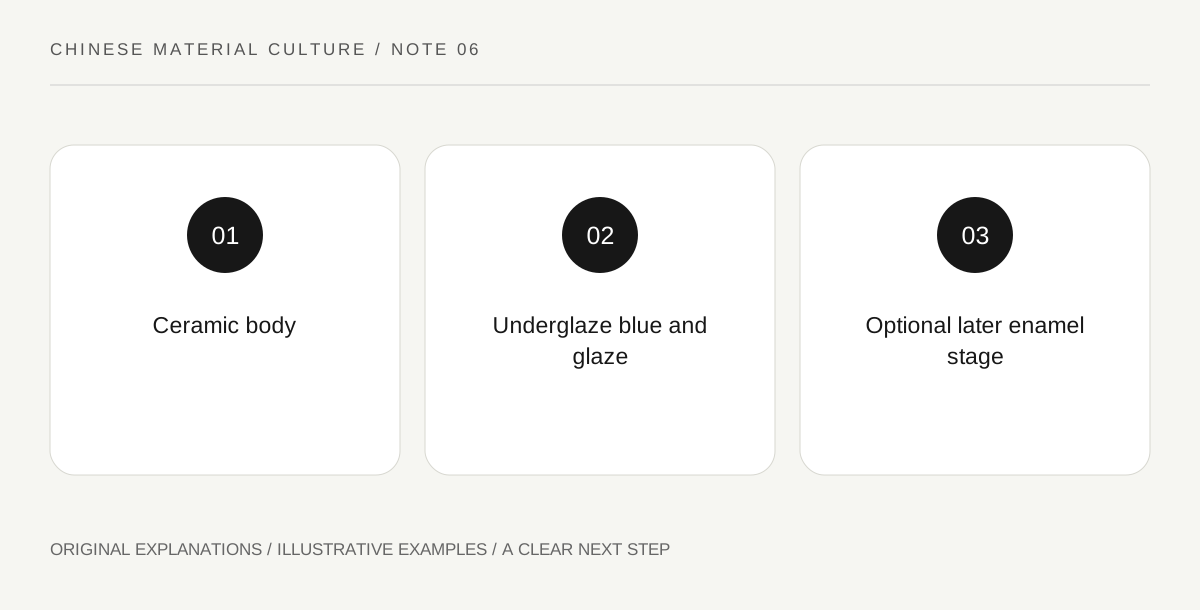
Original explanatory diagram. Read the full method and limitations below.
Begin with the object’s material record
A museum description can establish more than a photograph. The Met’s Jingdezhen chicken cup is identified as porcelain with underglaze cobalt blue and overglaze colored enamel. Those words distinguish the body, a blue design beneath glaze and colors applied above it. Write the material sequence beside the object name before trying to interpret the scene. Do not identify every white object with a blue design as the same ceramic ware. A visual resemblance can prompt a question, but it cannot replace information about body, decoration and firing.
Draw a cross-section rather than copying a pattern
For an original teaching diagram, draw a broad band labeled ceramic body, a thin design line above it and a clear outer layer labeled glaze. The purpose is showing a relationship, not representing exact thickness or a workable kiln recipe. Next, draw a second color on the outside and label it later overglaze decoration. A reader can now see why under and over are process terms rather than different shades of blue. Keep the illustration flat and schematic. It should never be presented as a measured technical section of an actual historic object.
Use the documented cup to understand sequence
The Met explains that the cobalt design on its cup was drawn before glazing and fired, followed by colored enamels and another, lower-temperature firing. That particular account is a useful example of multiple stages. It does not mean every blue-and-white vessel includes overglaze colors or follows exactly the same production history. Compare the material line and explanation for each object you study. A finished surface can combine stages so neatly that the sequence is invisible to a casual glance. Reading the record lets you appreciate coordination between drawing, glazing and later color rather than imagining one painterly moment.
Keep decoration separate from age and use claims
A reign mark, a famous motif or a blue-and-white palette can be reproduced. None establishes a production date or attribution by itself. When buying contemporary ceramics, ask what material and decoration are offered and what the maker states about intended use. Decorative beauty does not certify food-contact suitability or dishwasher treatment. For a museum object, use the institution’s date and provenance rather than a private guess from color. A useful comparison might examine how a blue outline organizes later color on one documented cup and how an all-blue design uses the white ground on another, without pretending to authenticate either.
Illustrative layered diagram
A learner draws two schematic vessels. The first has body, blue design and glaze; the second adds a later colored layer above the glaze. Both are labeled teaching diagrams with exaggerated layers. A note beside the documented chicken cup explains which sequence its museum record supports. No firing temperatures or recipes are inferred for home manufacture.
Practical checks
Optional checkboxes save only in this browser.
Questions that come up
Does blue-and-white mean the blue is on top of the glaze?
Not in the underglaze cobalt relationship described here. Read the specific object record, which identifies where the decoration sits within its production sequence.
Can a blue design or reign mark establish age?
No. Such features can be reproduced. Dating and attribution need broader evidence, while intended household use requires the maker’s actual product information.
References and scope
These sources support the factual background. Examples and exercises are original illustrative teaching material. References do not imply endorsement.
- The Met: chicken cup — Jingdezhen underglaze cobalt and later overglaze enamel in a documented object.