Chinese Inkstones: Read the Working Surface and the Carved Surround
An inkstone can be both a working writing tool and a carved object. Its usable surface and decorative features need to be read together, while inscriptions can raise historical questions rather than settling them. A documented bamboo-form inkstone shows why function, material and attribution belong in separate fields.
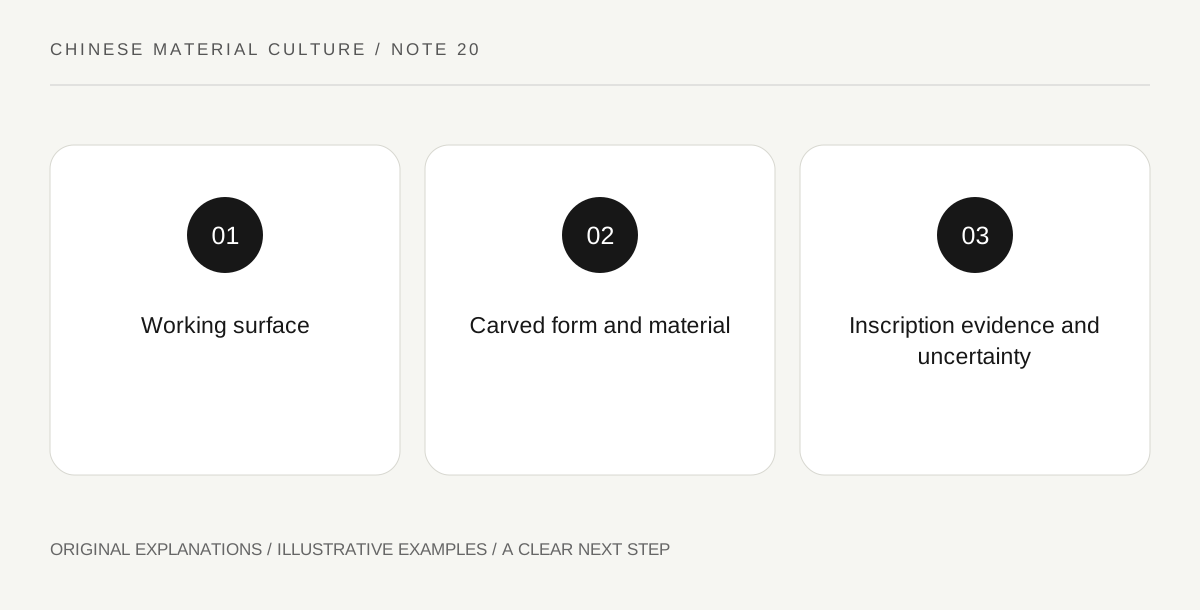
Original explanatory diagram. Read the full method and limitations below.
Locate the working area before describing ornament
The Met’s Inkstone with Bamboo Design includes a sunken grinding area within a carved green-schist form. Start by identifying that functional zone in the museum image. Then distinguish it from the relief, outer outline and wooden case. A decorative pattern may attract attention first, but the object’s purpose helps explain why some space remains differently treated. Do not assume every carved depression is a symbol or every smooth area is unfinished. The useful question is how the maker accommodates a working surface within an object that also has an elaborate visual identity.
Compare natural markings with carved form
The museum account describes natural color markings visible within the stone as well as low-relief bamboo-related decoration. Keep those sources of appearance separate. A line can come from the material itself, a carved edge, an inscription or a photographic reflection. Use the documented explanation to identify what the institution has established, then describe any remaining visual uncertainty honestly. A digital image is not a mineral identification test. Avoid applying liquids, rubbing powders or scraping an unknown surface to reveal its composition. Reading the relationship between material and carving does not require changing the object.
Treat inscriptions as evidence to interpret
The Met discusses inscriptions on the slab and case and explains questions they raise about dating and ownership. That is a valuable example of scholarship: a written date is information to evaluate, not an automatic birth certificate for the whole object. Different inscriptions can belong to different moments or require interpretation. When reading another inkstone, copy a reliable transcription or translation rather than guessing from character shapes. Keep the museum’s proposed explanation distinct from a claim of absolute certainty. This approach makes the inscription more interesting because it becomes part of an evidence-based historical argument.
Separate appreciation from practical use and cleaning
An old or valuable inkstone should not be put to work or cleaned experimentally because a visitor recognizes its original function. A museum object’s history and condition determine appropriate handling. For a contemporary working product, follow the maker’s use and care instructions and ask how its surface is intended to be used. A carved display object may not have the same practical purpose. In your notes, list material, working area, decoration and inscription separately. That simple structure prevents an attractive carved surround from obscuring function and prevents an impressive inscription from replacing the evidence needed for attribution.
Illustrative four-field study
A learner uses the museum record to make four notes: green-schist material, identified grinding area, bamboo-related carved form and inscriptions with dating questions. A simple drawing labels those zones without inventing measurements or translating unknown characters. The finished page distinguishes what the record states from what remains debated, and no physical handling or cleaning is attempted.
Practical checks
Optional checkboxes save only in this browser.
Questions that come up
Does an inscription’s date prove when the entire object was made?
Not automatically. The cited museum record shows how inscriptions can raise questions and require comparison with other evidence. Keep the institution’s interpretation and uncertainty visible.
Should I test an old inkstone by grinding ink on it?
Do not use an unknown or valuable object as an experiment. Historical function does not establish appropriate present handling. For a contemporary working product, follow the maker’s actual instructions.
References and scope
These sources support the factual background. Examples and exercises are original illustrative teaching material. References do not imply endorsement.
- The Met: inkstone with bamboo design — Green-schist inkstone, grinding area, relief and inscription uncertainty.