Paper and print3 min read
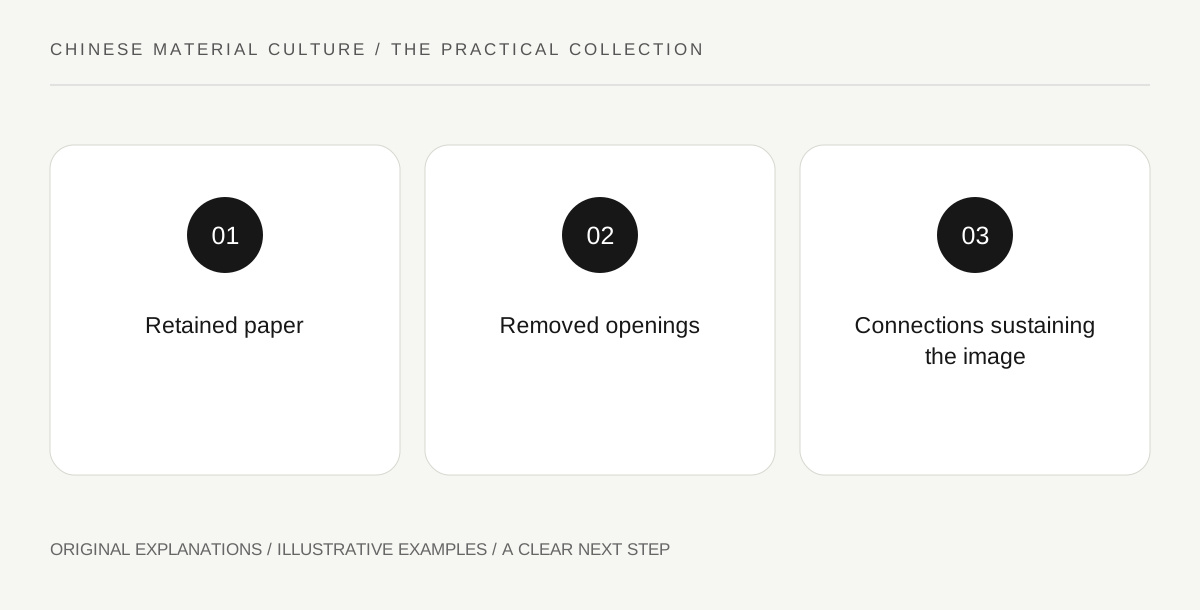
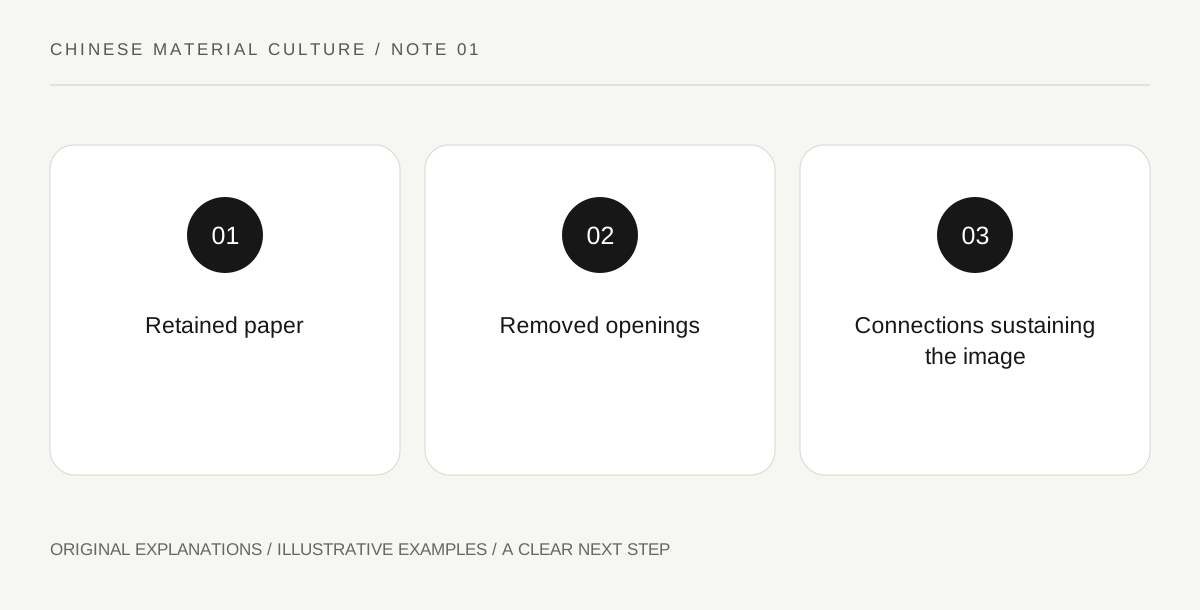
A paper-cut design is made as much by the paper left behind as by the shapes removed. Learning to see that relationship helps explain why an elaborate image can remain a single sheet. Start with a simple original paper exercise, then use the same question when looking at Chinese paper-cut traditions.
Read the guide ↗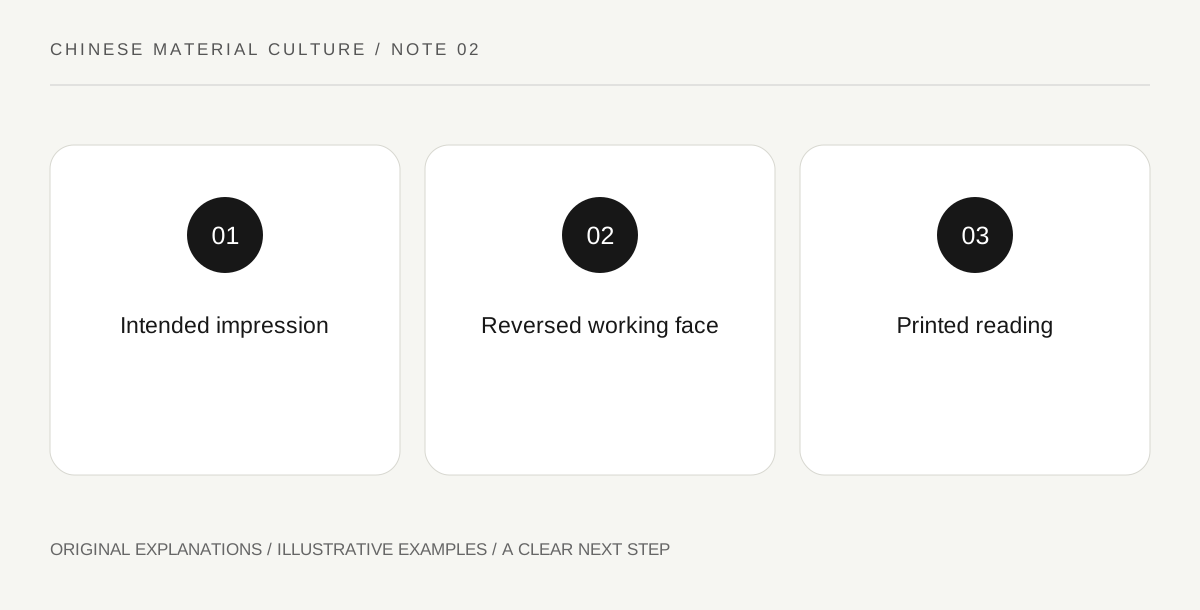
Paper and print3 min read
A seal has two related images: the carved face and the impression it leaves. They are reversed across contact, so a design that looks correct on the block may print incorrectly. Understanding that relationship helps you appreciate seal engraving before attempting any specialist carving.
Read the guide ↗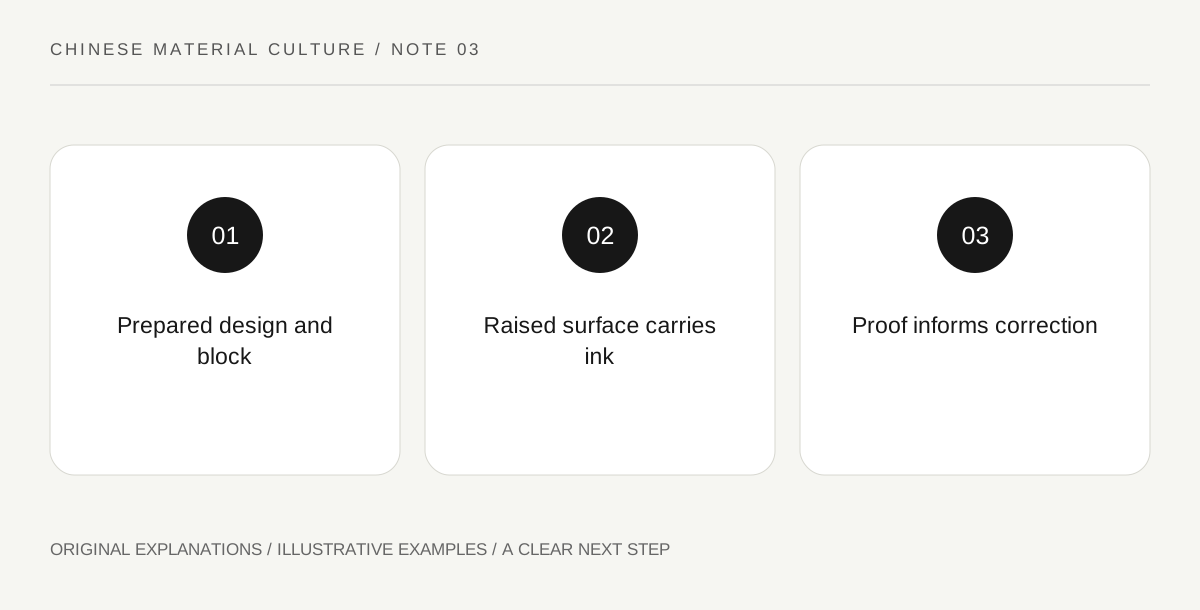
Paper and print3 min read
An engraved printing block carries an image through its surviving raised surface. The cuts and the inked areas play different roles, while proof impressions reveal problems that the block alone may hide. Understanding that sequence makes a printing demonstration easier to follow and a finished page easier to read.
Read the guide ↗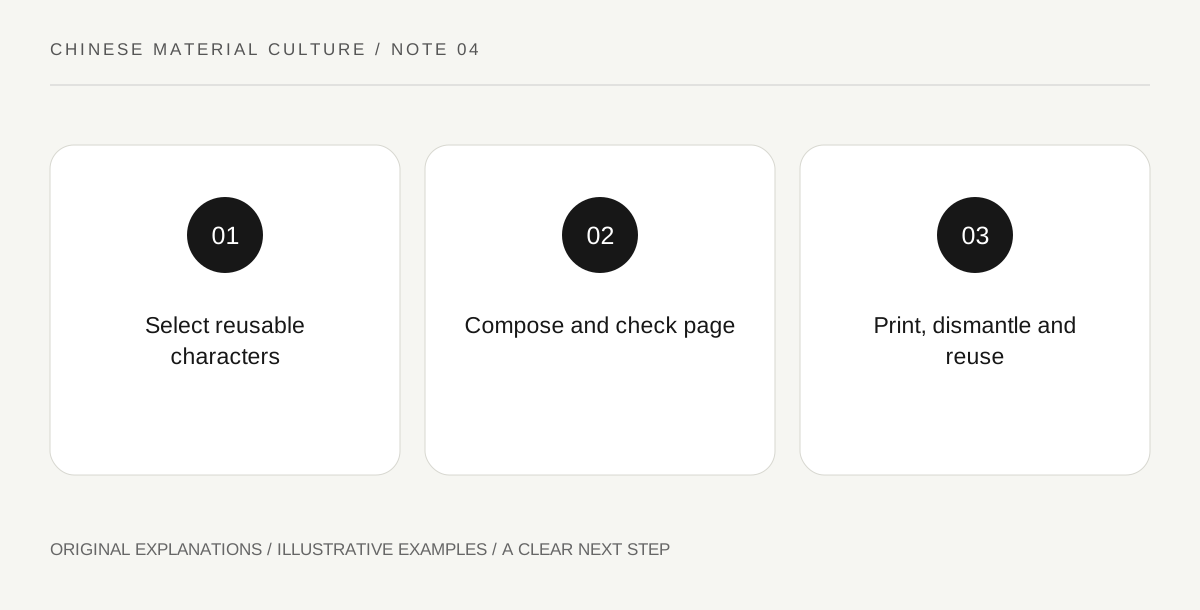
Paper and print3 min read
A woodblock holds a page as one engraved design; movable type assembles a page from separate characters. That difference changes the work of composing, checking and reusing the printing material. Rui’an’s documented genealogy-printing tradition shows why the craft includes language and community knowledge as well as manual skill.
Read the guide ↗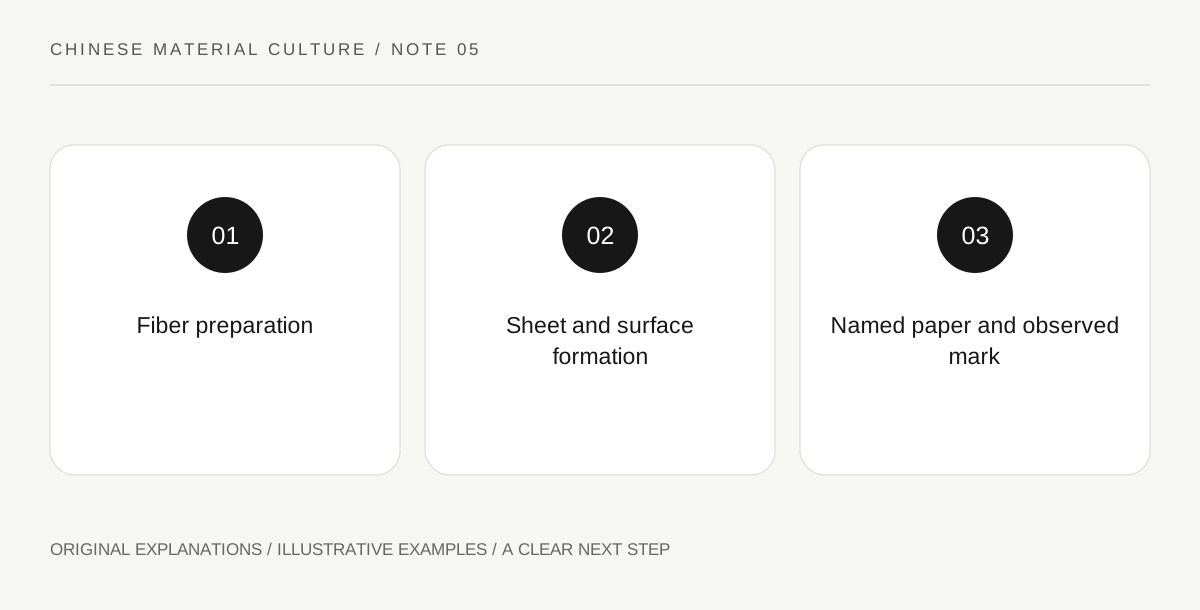
Paper and print3 min read
The English phrase rice paper can hide more than it explains. Xuan papermaking has a particular material and regional history, and a modern sheet sold for brushwork needs its own description. Begin with fibers, process and intended use rather than assuming every pale Asian-style paper is the same product.
Read the guide ↗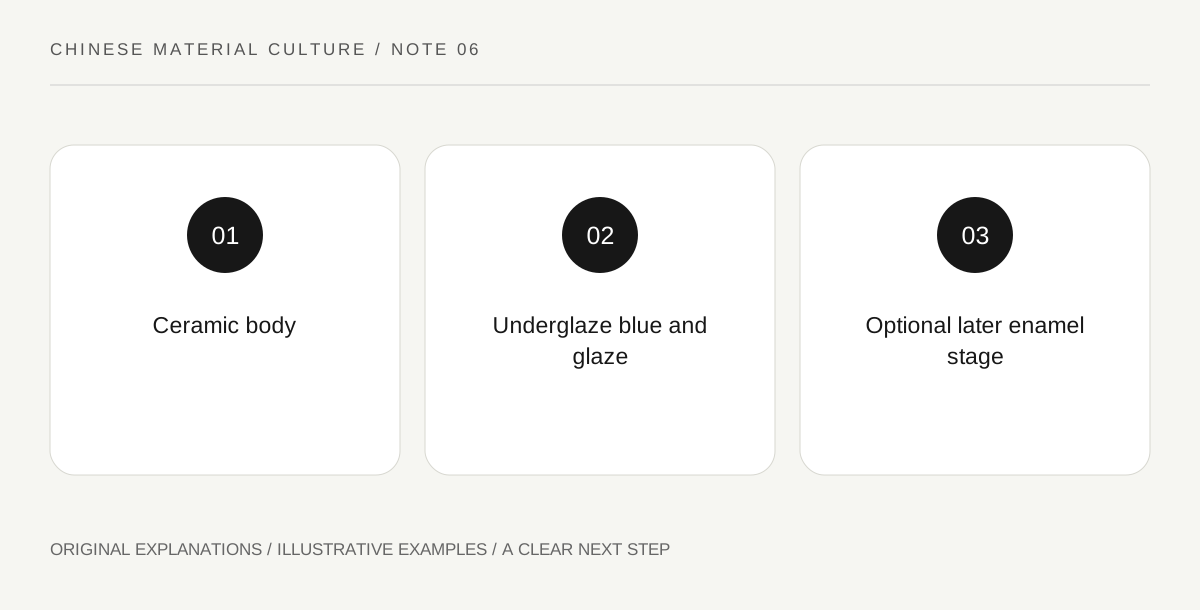
Clay and surface3 min read
Blue-and-white decoration becomes clearer when you imagine a ceramic object in layers. The painted design, glaze and ceramic body have different roles, and some objects add further colors through another process. Reading a documented example helps distinguish that sequence from a generic blue pattern printed on a white object.
Read the guide ↗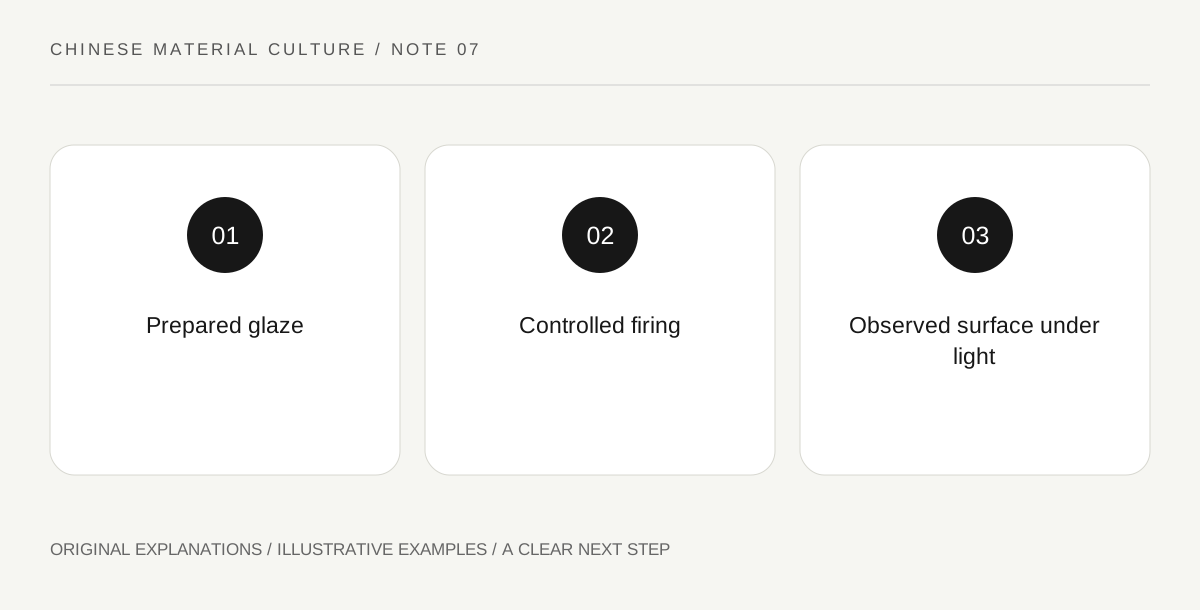
Clay and surface3 min read
A celadon surface is more than a green color chosen from a palette. Longquan’s documented tradition connects prepared glaze, the ceramic vessel and closely controlled firing. Looking at those relationships helps explain why superficially similar green objects can belong to very different materials and production histories.
Read the guide ↗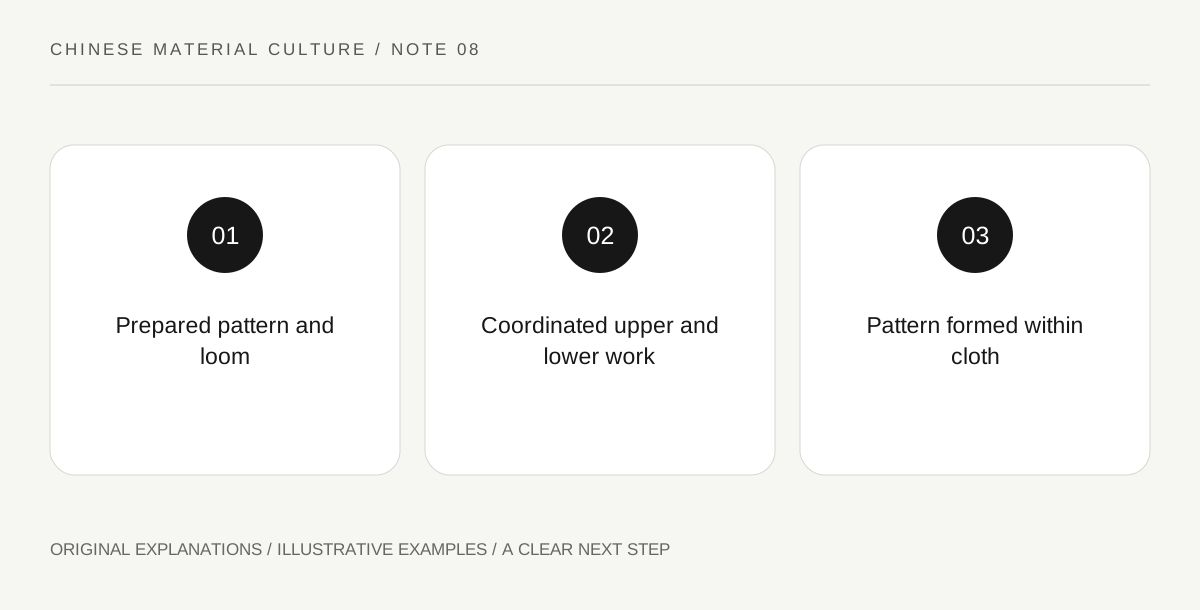
Textile traditions3 min read
Yunjin brocade is not embroidery added to an already finished cloth. Its pattern is produced through an organized weaving process, and the documented tradition includes coordinated work by two craftspeople. Seeing the loom as a working relationship makes the finished textile’s complexity easier to appreciate.
Read the guide ↗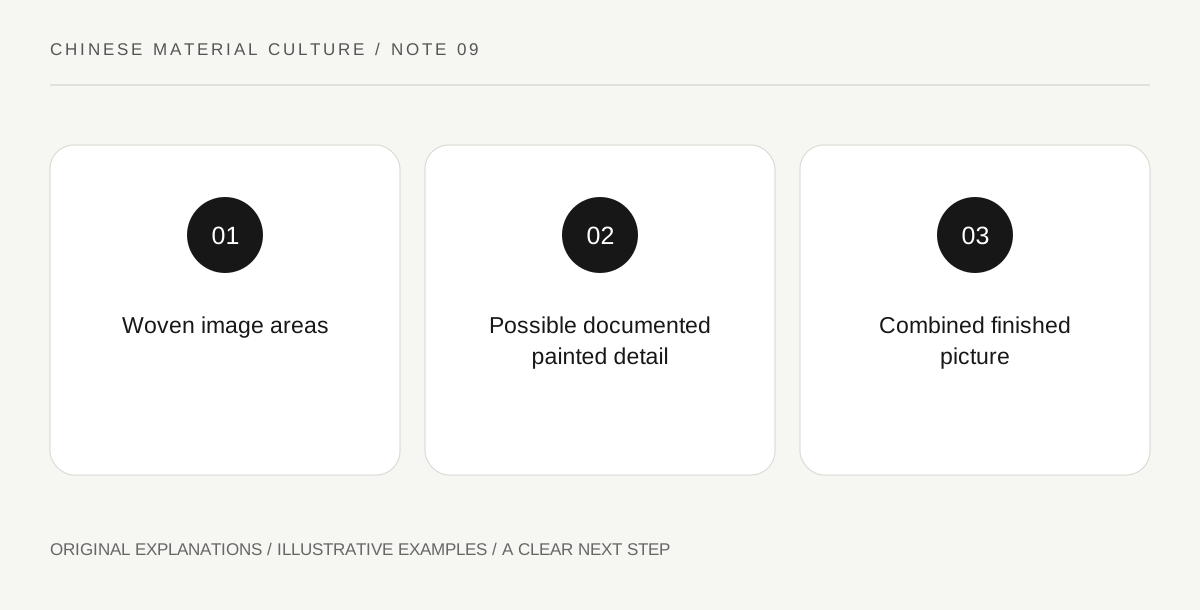
Textile traditions3 min read
A silk picture that resembles a painting may actually be a tapestry, and a woven picture may also contain painted details. Kesi rewards that careful distinction. Read a documented object’s material record before deciding how every visible line was made or treating all textile pictures as embroidery.
Read the guide ↗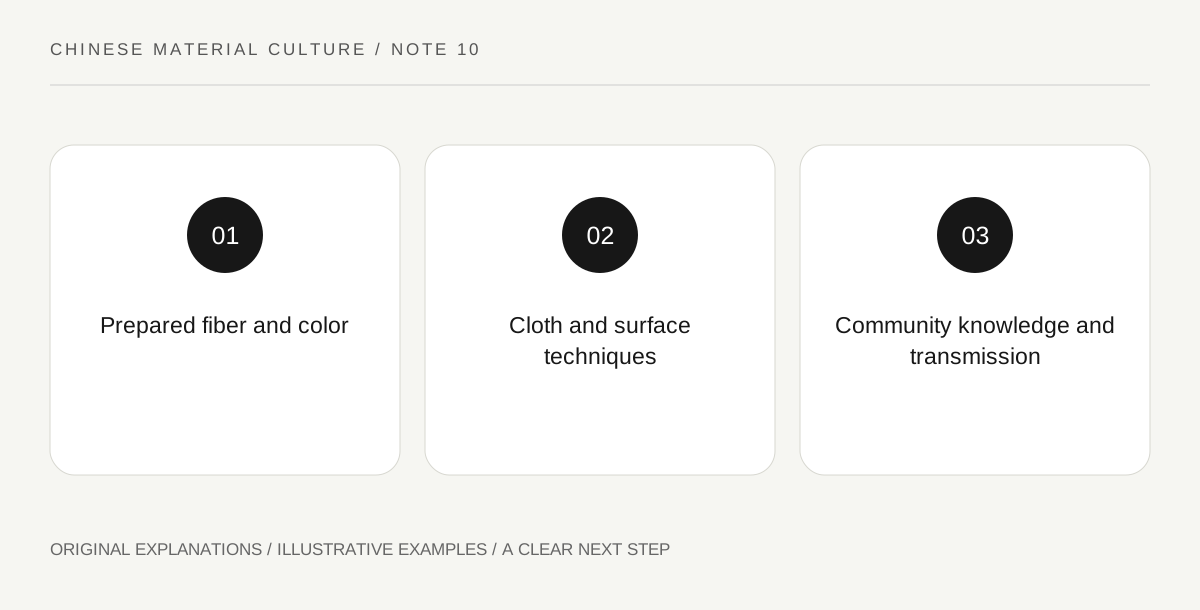
Textile traditions3 min read
Traditional Li textiles from Hainan bring several skills into one material culture. A finished patterned cloth may embody choices made long before the visible motif appears. Reading those stages together also helps keep community knowledge attached to the textile rather than turning its patterns into anonymous decorative graphics.
Read the guide ↗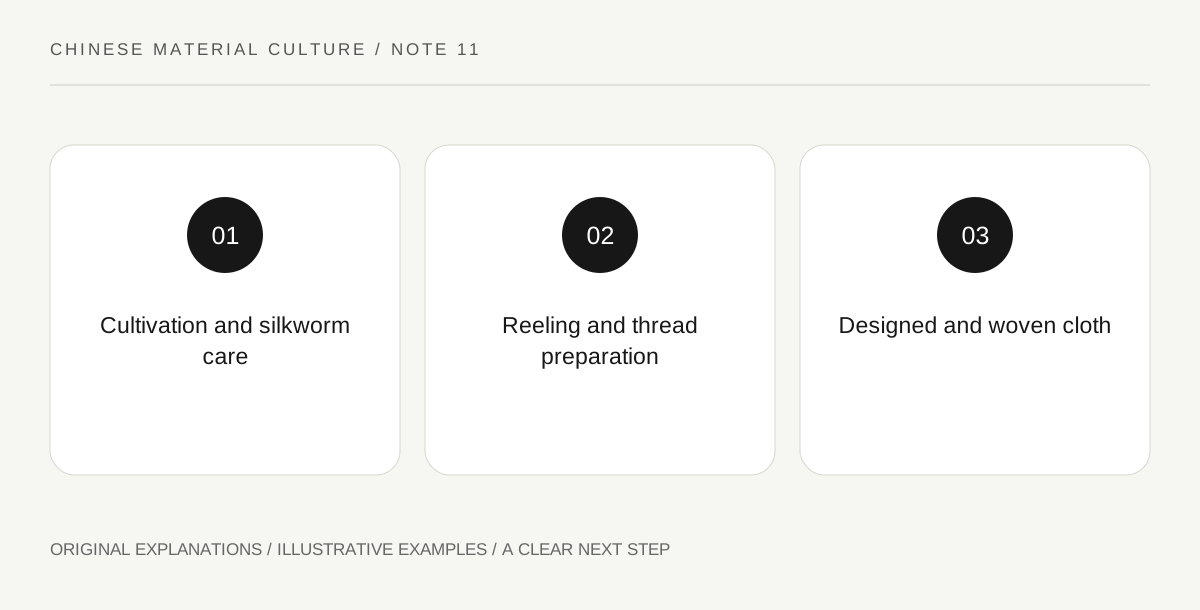
Textile traditions3 min read
Silk begins before weaving and does not become a finished fabric in a single step. Chinese sericulture connects cultivation, silkworm care, reeling, thread preparation and textile design. Following that chain makes a workshop demonstration or product label much easier to understand without treating every glossy material as equivalent.
Read the guide ↗
Festive construction3 min read
A shadow puppet is a crafted figure intended to become part of a performance. Its silhouette, joints and control rods cooperate with a lit screen, music and a performer’s skill. Looking at the puppet only as a flat decorative object misses much of the design problem it was made to solve.
Read the guide ↗
Metal and carved objects3 min read
Cloisonné can look like painting on metal until you notice the fine boundaries organizing its colors. The wire partitions and enamel filling have different jobs. A documented vessel reveals how design, repeated firing and finishing cooperate to produce a surface that appears unified in the finished object.
Read the guide ↗
Metal and carved objects3 min read
Carved lacquer is easy to misunderstand as carved wood painted red. In the documented Chinese technique, the lacquer itself is built up and then carved over a support. Knowing which material receives the carving changes how you read depth, relief and the labor hidden beneath a finished decorative surface.
Read the guide ↗
Festive construction3 min read
A three-dimensional animal lantern is both an object and a lighting design. Its frame holds the volume, its covering carries color and its illumination changes what the audience sees. Shanghai’s documented lantern practice offers a useful way to study those layers without assuming every Chinese lantern uses the same materials.
Read the guide ↗
Festive construction3 min read
Beijing’s swallow-shaped kites are recognizable through an expressive head, spread body and forked tail. Their appearance belongs to a regional toy and craft tradition, while a functioning kite also depends on its construction and intended use. Study the form without assuming every beautiful display piece is ready to fly.
Read the guide ↗
Festive construction3 min read
Bamboo weaving transforms narrow elements into useful surfaces and forms. Following one strip is often more revealing than staring at the finished pattern as a whole. Begin with a simple paper analogy, then look at how a documented Chinese woven object handles changes of direction, spacing and the edge.
Read the guide ↗
Textile traditions3 min read
A textile picture can communicate volume through many small changes of color and direction. Shanghai-style velvet embroidery offers a particular example of that approach, with wool thread and a local history of adapting imported and Chinese techniques. Read the named medium before assuming a painted-looking image is silk or pigment.
Read the guide ↗
Metal and carved objects3 min read
A filigree-inlay object combines several kinds of skilled work that can merge visually into one ornate surface. Fine wire forms patterns, while settings and inserted materials add other elements. Separating those jobs helps you understand the construction without assuming that glitter or complexity proves the object’s age or material value.
Read the guide ↗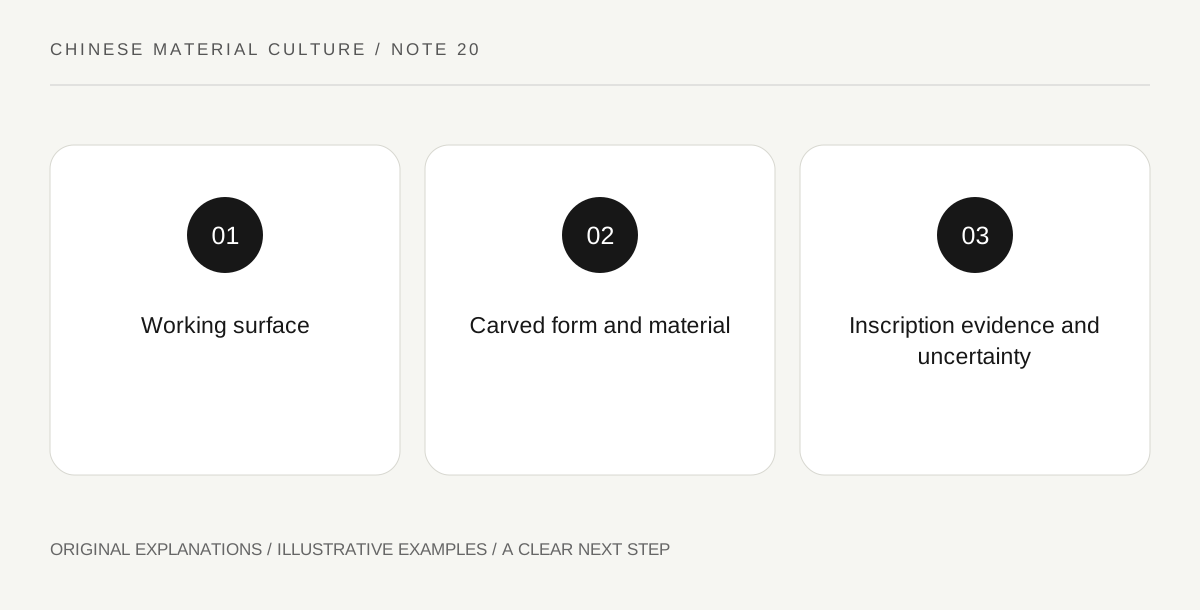
Metal and carved objects3 min read
An inkstone can be both a working writing tool and a carved object. Its usable surface and decorative features need to be read together, while inscriptions can raise historical questions rather than settling them. A documented bamboo-form inkstone shows why function, material and attribution belong in separate fields.
Read the guide ↗